
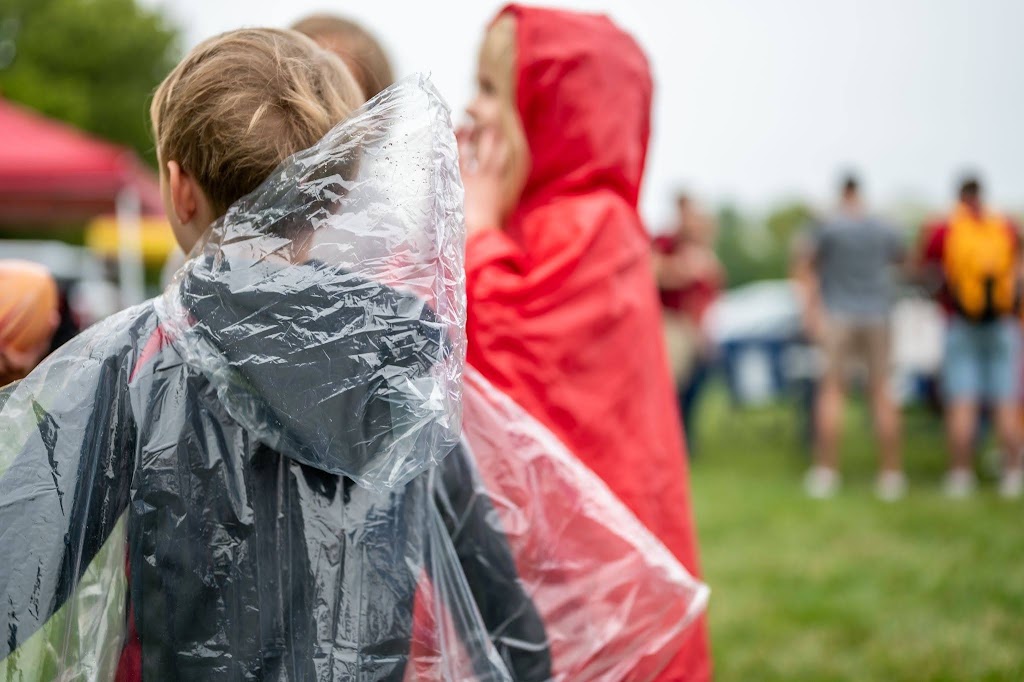
Anyone who has spent a summer in Pennsylvania knows just how unpredictable the weather can be. You can wake up to a perfectly blue, cloudless morning in Delaware County, check the radar, and see absolutely nothing but clear skies ahead. But by 3:00 PM, as the summer humidity builds over the landscape, those familiar dark, heavy clouds begin to roll in. Within thirty minutes, a beautiful afternoon can transform into a sudden, roaring summer thunderstorm complete with driving rain and whipping winds.
If you are planning an outdoor wedding, a corporate festival, or a milestone backyard anniversary party, this unpredictability can feel incredibly stressful. It’s completely natural to worry that a sudden downpour will soak your decor, ruin your food, and send your guests running for their cars.
But here is the honest truth from one event professional to another: while you absolutely cannot control the weather, you can control how prepared you are for it.
Having a rock-solid rental contingency plan in place ahead of time is the ultimate difference between a minor, easily managed hitch and a completely canceled event. When you have the right infrastructure built into your initial design, a passing storm becomes nothing more than a dramatic backdrop; a cozy, intimate moment where your guests stay completely dry, and the party keeps moving without skipping a beat.
To build a weather-proof summer event, you need to look beyond a basic overhead canopy. Let’s dive into the five critical contingency pillars that will keep your celebration flawless, safe, and completely dry, no matter what the skies decide to do.
1. Frame Tents vs. Pole Tents in High Winds
When a summer storm hits, rain is only half the battle; high winds and sudden gusts are what truly test the structural integrity of an outdoor venue. To understand how your event will hold up, it helps to demystify the core engineering differences between the two main types of rental structures: pole tents and frame tents.
High-peak pole tents rely on heavy tension. They feature towering center poles that push the vinyl upward, while a system of heavy-duty web straps and stakes pulls the tent outward into the ground. Because they rely entirely on this taut-tension system, high-quality pole tents are incredibly aerodynamic and naturally resilient in high winds when properly staked into expansive grass surfaces, such as a golf course or a spacious estate lawn.
Frame tents, on the other hand, are constructed with a rigid, self-supporting interlocking aluminum skeleton. Because they do not require center poles or expansive staking footprints to keep their shape, they offer incredible versatility. If a sudden summer storm brings high winds to an event set up on a hard surface, such as an asphalt parking lot, a concrete plaza, or a tight suburban patio where stakes cannot be driven deep into the ground, a frame tent is the gold standard.
When anchored by massive engineered concrete ballast weights or securely fastened to structural surfaces, a frame tent provides rigid, immovable stability against unexpected lateral wind gusts.
2. The Critical Role of Sidewalls and Rain Gutters
An overhead tent canopy protects your guests from rain falling straight down, but summer thunderstorms rarely fall vertically. They are almost always accompanied by driving, sideways rain. This is where high-quality, commercial-grade sidewalls become completely non-negotiable.
Having a stash of sidewalls on-site allows your setup crew to quickly clip or slide them into place along the windward side of the tent as soon as the wind picks up. Solid white walls offer total protection, while cathedral-window sidewalls let natural light filter in, so your event still feels bright and open despite the storm outside.
However, the real secret weapon of professional tenting is the structural rain gutter. If your event layout requires combining two or more tents together, such as a main dining tent connected to a catering preparation tent or a cocktail lounge canopy, the space where the two structures meet becomes a natural waterfall during a downpour.
Professional rental companies use heavy-duty vinyl gutter systems that seal the seams between tents, catch runoff, and channel water safely away from the event perimeter. This keeps the interior walkways completely dry and prevents water from splashing back onto your guests or vendors.
3. Protecting the Subfloor and Guest Footwear
Even if the tent stays completely dry from above, water that has saturated the ground can quickly cause issues from below. When heavy rain hits grass, it takes very little time for the turf to soften, turning a beautiful lawn into a muddy, waterlogged trap for expensive dress shoes, high heels, and trailing gown hems.
To protect your guests’ footwear and preserve the smooth flow of your event, you must consider your flooring strategy. The most effective defense is a raised event subfloor. Laying down a solid, elevated plastic or wood subfloor across the entire footprint of the tent (or at the very least, across high-traffic zones like the dance floor, bar lines, and main entryways) creates a rigid barrier. Any water that pools or flows naturally along the grade of the grass passes completely beneath the subfloor, leaving your guests walking on a perfectly dry, solid, level surface.
If a full subfloor is outside your budget, strategic placement is your next best tool. Work with your rental team to analyze the property’s natural slope and drainage before installation. Avoid low-lying basins where water naturally collects, and plan to position your main walkways on higher, well-draining ground.
4. Securing Power and AV Equipment
An outdoor summer party relies entirely on electricity to keep the magic alive, from the ambient glow of bistro lighting and chandeliers to the DJ’s sound system and the caterer’s hot-holding cabinets. Water and live electrical currents are a dangerous combination, meaning a proper weather plan must prioritize power safety.
Relying on standard household outdoor outlets or a daisy-chain of residential extension cords run through the grass is a recipe for a blown breaker, or worse, the moment a light drizzle starts. A professional rain plan utilizes heavy-duty, weatherized commercial generators placed discreetly away from the main tent.
All electrical distribution boxes, main breakers, and cable runs should be industrial-grade, fully rated for wet weather, and shielded inside heavy-duty rubber cable ramps. This prevents water from tripping the ground-fault circuit interrupters (GFCIs) and ensures that your lighting, music, and food service continue running smoothly during the heaviest downpours.
5. The “Beat the 5-Day Forecast” Rule
One of the biggest mistakes an event host can make is waiting until the local news anchor reports a rainy five-day forecast before calling their rental company for backup equipment. Late June, July, and August represent the absolute peak of the summer event season across the Delaware Valley. Rental inventory, especially extra sidewalls, structural gutters, portable flooring, and backup tents, is in incredibly high demand.
If you wait until the Monday before a Saturday wedding to request a rain package, there is a very high probability that the necessary inventory will already be booked by other proactive planners.
The smartest strategy is to apply the “Beat the 5-Day Forecast” rule: secure your contingency equipment months in advance when you reserve your primary tent. Think of it as a small insurance policy for your peace of mind. If the weekend arrives and the weather is flawless, you can simply choose not to drop the sidewalls. But if a storm does brew, your equipment is already safely on the truck, reserved exclusively for you.
Real Weather Security Demands a Professional Team
At the end of the day, the best weather-proof equipment in the world is only as good as the team installing it. Safely anchoring a massive structure against a summer storm requires an experienced crew that understands proper soil conditions for staking, precise ballast weight distributions, and rapid, secure deployment of structural accessories.
At Tents & Events, we bring decades of local experience navigating the unpredictable summer patterns of the Greater Philadelphia area. We don’t just deliver rentals; we partner with you to engineer total peace of mind. Our installation teams monitor local conditions, handle all the heavy lifting, and ensure your structures are built to the highest safety and wind-resistance standards.
Don’t spend the weeks leading up to your big day obsessively refreshing the weather app on your phone. Contact Tents & Events today to speak with our Delaware Valley rental specialists, and let’s collaborate to build a stress-free, ironclad rain plan for your upcoming summer dates!


