
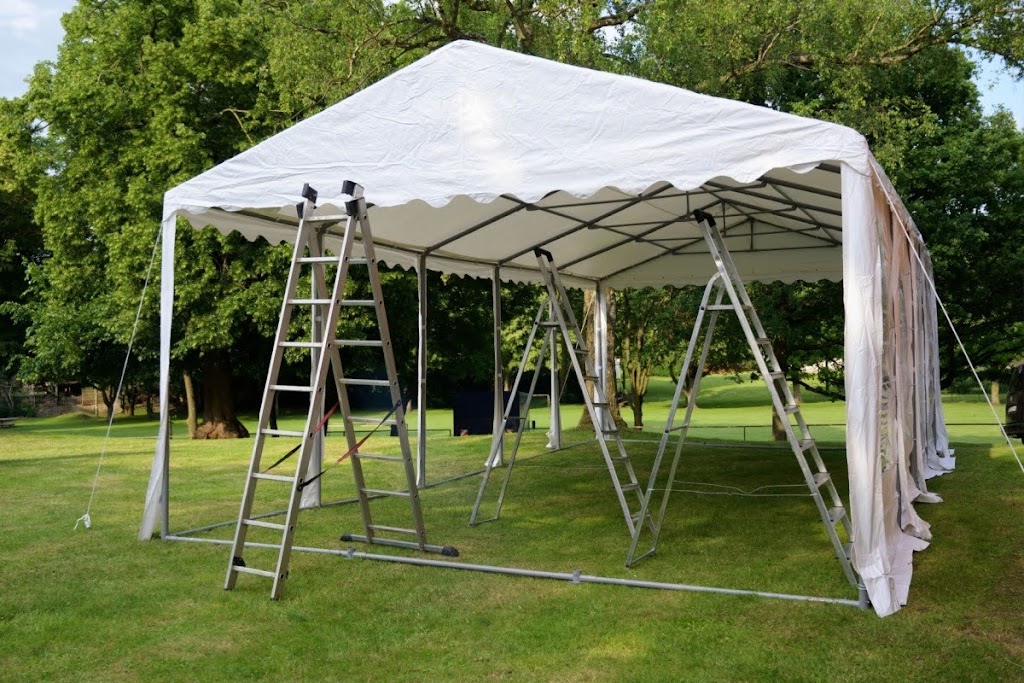
Planning an outdoor event in the heart of Bucks County is a beautiful way to take advantage of our rolling landscapes, historic estates, and lush backyards. Whether you are envisioning a sophisticated wedding in Doylestown or a grand corporate gala in Newtown, the perfect tent serves as your temporary venue, protecting your guests from the elements. However, amidst the excitement of choosing linens and lighting, one of the most overlooked yet critical steps is ensuring your structure complies with local township regulations.
Many hosts assume that, because a tent is temporary, it falls into a “gray area” of the law. In reality, local municipalities view large tents as temporary structures subject to building and fire codes. Failing to secure the proper permits can lead to more than just a headache; it can result in heavy fines or, in the worst-case scenario, the local fire marshal shutting down your event before the first guest arrives. Understanding these rules early is the key to a stress-free celebration.
When is a Permit Actually Required?
The most common question we hear is: “Does my tent really need a permit?” In Pennsylvania, the answer is governed by the Uniform Construction Code (UCC), but local Bucks County townships often have their own specific thresholds.
Generally, any tent exceeding 900 square feet (for example, a 30′ x 30′ tent) requires a permit. If you are using a “canopy” (a structure without sidewalls), the threshold is often slightly higher, typically around 1,200 square feet. However, occupancy also plays a role. If your event will host a large number of people in a confined space, the township may require a permit regardless of the tent’s physical footprint to ensure guest safety and proper egress.
The Difference Between Residential and Commercial Permits
Where you host your event significantly changes the permitting landscape.
- Residential Permits: If you are hosting a wedding in your backyard in Upper Makefield, the process is often simpler but still requires a “Zoning” or “Special Event” permit. Townships want to ensure the tent is a safe distance from property lines (setbacks) and doesn’t interfere with septic fields or protected wetlands.
- Commercial Permits: If you are renting a tent for a public festival, a restaurant patio, or a corporate park in Bensalem, the scrutiny is higher. You may be required to affix a professional seal to your site plans, and permit fees are typically higher. Public venues often have existing “blanket permits,” but you must always verify that your specific installation is covered.
Safety Standards and Inspections
Permitting isn’t just about paperwork; it’s about life safety. When you apply for a permit in Bucks County, the local Fire Marshal will look for three main things:
- Flame-Retardant Certificates: Every professional tent should have a certificate proving the material meets NFPA 701 standards for fire resistance. At Tents & Events, we provide these documents for every installation.
- The “Blue Stakes” / PA One Call: Before a single stake is driven into the ground, Pennsylvania law requires a call to 811 (PA One Call). This ensures we don’t hit underground power, gas, or water lines. This must be done at least three business days before the “dig” begins.
- Structural Stability: Officials may check for proper anchoring. In high-wind areas or on asphalt where stakes aren’t possible, we use specialized ballasting systems to ensure the tent stays exactly where it belongs.
Timeline: When to Start the Paperwork
Bucks County is a patchwork of municipalities, and each has its own pace. While some townships, like Newtown and Doylestown, have streamlined online portals, others still operate on a paper-and-mail system.
As a rule of thumb, you should start the permit application process at least 30 to 45 days before your event. This allows time for the building official to review the plans, request any changes, and schedule a pre-event inspection if necessary. Waiting until the week of the event is a recipe for disaster, as many local offices only have inspectors available on specific days of the week.
Common Permitting Pitfalls to Avoid
Even the most organized planners can get tripped up by the details. To keep your application moving, avoid these common mistakes:
- Vague Site Maps: Townships need a clear drawing showing exactly where the tent sits in relation to permanent buildings, fences, and power lines.
- Ignoring Exit Signs: If your tent has sidewalls, it is legally considered an enclosed room. This means you must have “Exit” signs (often illuminated) and fire extinguishers placed at specific intervals.
- The “Double Fee” Trap: Some municipalities double the permit fee if the tent is erected before the permit is officially issued. Always wait for the green light.
Partner with a Local Expert
Navigating the web of local ordinances, fire codes, and 811 calls is a full-time job. This is why partnering with an experienced local rental company is essential. You shouldn’t have to spend your engagement or your corporate planning retreat arguing with a zoning officer.
At Tents & Events, we bring years of local expertise to every job. We are intimately familiar with the specific requirements of municipalities throughout Bucks County and the surrounding Philadelphia area. We don’t just provide the “roof” over your head; we provide the logistical support to ensure your structure is safe, legal, and compliant.
Ready to start planning your perfect outdoor occasion? Contact Tents & Events today for a consultation. Let us handle the logistics so you can focus on making memories.


